

What if the stack of unorganized receipts and the “uncategorized” bank feed weren’t a source of dread, but the key to your business’s next big move? It’s common to feel a heavy weight in your chest when you think about the upcoming April 15, 2026 deadline. You’ve worked hard to build your company from the ground up, but the data entry has fallen behind. This leaves many owners feeling overwhelmed by transaction categorization and anxious about potential IRS errors.
We understand that “untangling the books” feels like a burden you shouldn’t have to carry alone. A thorough bookkeeping cleanup for tax season transforms your messy financial history into a clean, tax-ready foundation. It gives you total control over your growth and the clarity you’ve been missing. In this guide, we’ll explain how to organize historical records to ensure a seamless handoff to your tax preparer and gain visibility into your real profit margins. Peace of mind is finally within reach.
Key Takeaways
- Replace financial anxiety with a sense of calm control by clearing the “financial fog” that obscures your business’s true performance.
- Implement a structured bookkeeping cleanup for tax season to reconcile bank feeds and categorize historical transactions for a clean 2026 ledger.
- Prepare a professional, error-free data set that allows for a seamless handoff to your tax preparer while revealing your real profit margins.
- Turn your organized financial history into a strategic asset that helps you identify spending leaks and simplifies the process of securing business loans.
The High Cost of Financial Friction: Why Bookkeeping Cleanup for Tax Season Matters
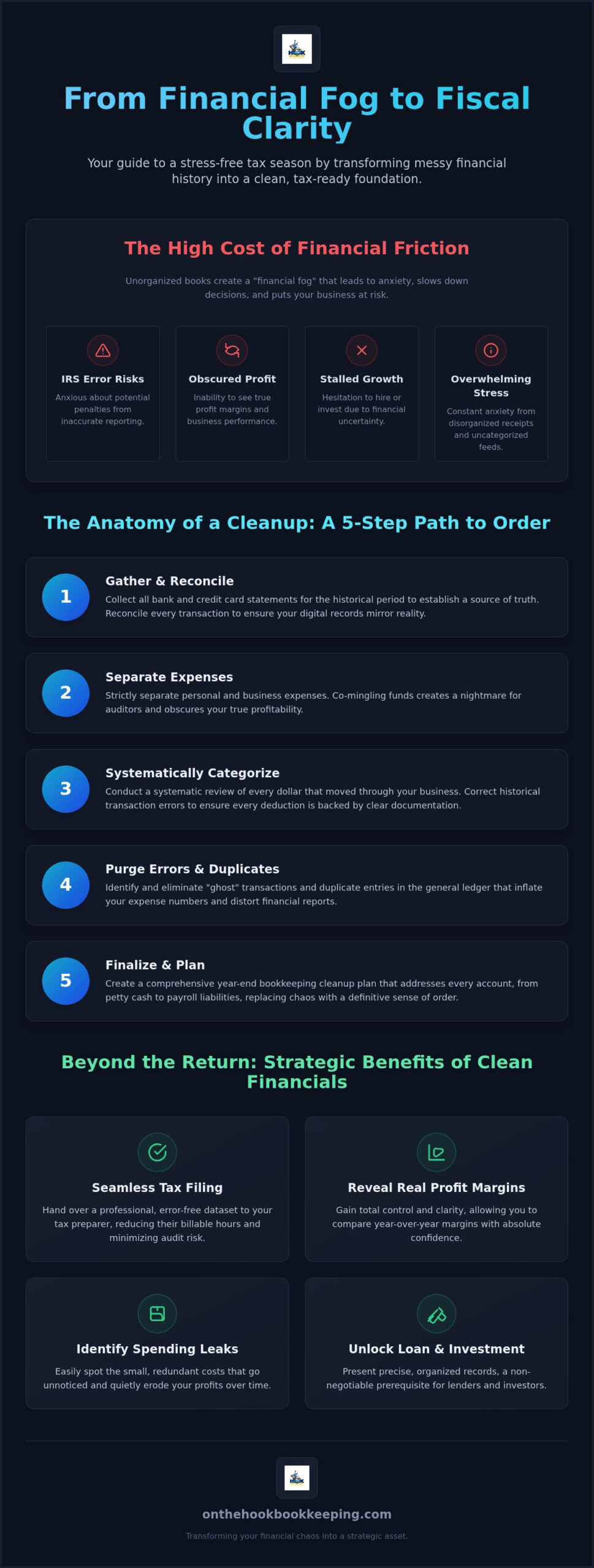
Running a business shouldn’t feel like driving through a thick mist. For many owners, “financial fog” isn’t just a metaphor; it’s the heavy anxiety that settles in when you realize your bank balance doesn’t match your ledger. This friction slows down every decision you make. You might hesitate to hire or invest because you aren’t sure what’s actually left in the tank. While understanding the basics of bookkeeping is a start, a professional bookkeeping cleanup for tax season goes much deeper. It is the systematic process of reconciling every past transaction and correcting the ledger errors that have quietly piled up over the months.
There’s a massive difference between simply “doing the books” and investing in professional historical financial record organization. One is a reactive chore; the other is a proactive strategy. In 2026, having tax-ready books isn’t just a convenience. It’s a baseline requirement for business survival. Without this structured foundation, you’re essentially guessing your way through the year and risking costly mistakes that only surface when it’s too late to pivot.
Why Historical Financial Record Organization is Your Growth Foundation
Historical organization is the mechanical tune-up for a business’s engine. When your past data is clean, you can finally compare year-over-year margins with total confidence. Investing in a thorough bookkeeping cleanup for tax season ensures your records are ready for any scrutiny. You hand over a polished file to your tax preparer, which reduces their billable hours and keeps more cash in your business. This clarity allows you to move from a state of confusion to one of empowered decision-making.
The Anatomy of a Cleanup: How to Fix Messy Records Before Tax Season
The 2026 standard for transaction categorization requires more than just picking a label that looks right. It demands a systematic review of every dollar that moved through your business. A successful bookkeeping cleanup for tax season begins with rigorous bank reconciliation. This process ensures your digital records mirror reality. We often find that the “catch-up” phase reveals missing months of data or unrecorded expenses paid out of pocket. This is why fixing messy QuickBooks records is essential; your software must be a faithful reflection of your bank statements.
One critical step is strictly separating personal and business expenses. Co-mingling funds creates a nightmare for auditors and obscures your true profitability. Following strict IRS recordkeeping requirements ensures that every deduction you claim is backed by clear documentation. If you’re feeling behind, our cleanup and catch-up support can help you regain your footing before the tax deadline.
Untangling Historical Records: From Chaos to Clarity
The path to organized books follows a logical progression. First, gather all bank and credit card statements for the historical period to establish a source of truth. Second, identify “ghost” transactions and duplicate entries in the general ledger that inflate your expense numbers. Finally, create a year end bookkeeping cleanup plan that addresses every account, from petty cash to payroll liabilities. This methodical approach replaces chaos with a definitive sense of order.
Beyond the Return: The Strategic Benefits of Clean Financials
Completing a bookkeeping cleanup for tax season does more than satisfy a deadline. It restores your vision. When your records are untangled, you can finally identify the hidden “spending leaks” that often go unnoticed during a frantic busy season. These small, redundant costs can quietly erode your profit margins over time. Beyond internal efficiency, performing a thorough bookkeeping cleanup for tax season is a prerequisite for growth. Lenders and investors demand precision; therefore, organized records are essential for cleaning up business financials for loan approval in 2026.
Think of this process as a bridge. It moves you from the stress of the past into a proactive future. Using a professional bookkeeping cleanup checklist ensures every account is reconciled, providing a foundation for catch up bookkeeping. There’s a quiet confidence that comes from knowing your numbers are 100% accurate before you hand them off to your tax preparer. You’re no longer hoping for the best; you’re operating from a position of strength.
Transitioning from Cleanup to Consistent Monthly Visibility
A one-time cleanup is a powerful reset, but it shouldn’t be the end of the road. Transitioning to ongoing small business bookkeeping services ensures you never have to face a massive backlog again. Monthly reporting prevents the data pileup that leads to another cleanup project in 2027. We act as a steady hand in your partnership, handling the heavy lifting of administration so you can return to your primary passion. This consistent visibility turns your financial data into a roadmap rather than a source of anxiety.
Reclaim Your Financial Clarity for 2026
A thorough bookkeeping cleanup for tax season is more than a compliance chore; it is a strategic investment in your company’s visibility. By untangling messy records and ensuring expert transaction categorization, you move from a state of confusion to one of empowered decision-making. These clean, up-to-date records make the handoff to your tax preparer seamless and protect your hard-earned margins. We specialize in helping small business owners and tradespeople navigate these complexities with a steady, reliable hand.
If you are ready to stop feeling behind and start focusing on your primary passion, our team is ready to support you. Get your time back and your books cleaned up—Schedule a Consultation with On the Hook Bookkeeping. You have worked hard to build your business from the ground up. Let us handle the heavy lifting of administration so you can lead with confidence and grit.
Frequently Asked Questions
What exactly is included in a bookkeeping cleanup for tax season?
A bookkeeping cleanup for tax season involves a systematic review of your entire financial history for the year. We focus on transaction categorization, reconciling every bank and credit card statement, and identifying missing expenses. This process untangles messy books and corrects ledger errors. It ensures your records are accurate and ready for a smooth handoff to your tax preparer or for loan applications.
How long does it take to organize historical financial records for a full year?
The timeline for organizing historical financial records depends on the volume of transactions and the complexity of your accounts. We work methodically to ensure every entry is verified, which typically takes several weeks for a full year of data. This steady pace gives you a clean slate without rushing the vital details that ensure your 2026 records are precise and ready for growth.
Can I still get a cleanup if I lost my receipts from early in the year?
Yes, you can still achieve a professional cleanup even if physical receipts are missing. We use your bank and credit card statements as the primary source of truth to reconstruct your financial history. While digital copies are ideal for IRS documentation, we categorize the vast majority of your business activity using electronic records. This provides a reliable, grounded foundation for your tax season handoff.
Does a bookkeeping cleanup include filing my business taxes?
No, our services don’t include tax preparation or filing. We specialize in the administrative cleanup that makes your CPA’s job seamless. By delivering organized historical data, we reduce the time your tax preparer spends on basic data entry. This allows them to focus on maximizing your deductions while we ensure your bookkeeping stays accurate and your real profit margins remain visible.