

What if the messy state of your bank statements isn’t a reason to wait, but the exact reason you should start today? You’ve likely spent weeks staring at receipts, feeling a pang of guilt that you aren’t ready for professional help. We understand that weight. This guide will show you exactly how to prepare for outsourced bookkeeping without the stress, turning your financial anxiety into a sense of calm control.
It’s a common fear that a bookkeeper will judge the chaos or that you’ll need forty hours just to get organized. Professional cleanup is a standard part of the process, not a hurdle you must clear alone. We’ll break down the short list of documents you actually need, how to shift your mindset, and what your first 30 days will look like. It’s time to stop the heavy lifting and get back to your passion.
Key Takeaways
- Reframe “messy books” from a source of shame into a standard starting point for professional cleanup and catch-up services.
- Follow a practical checklist on how to prepare for outsourced bookkeeping, including how to grant secure “Accountant Access” to your financial software.
- Clarify the division of labor for daily tasks like accounts payable and payroll to ensure a seamless handoff of your administrative burden.
- Establish a roadmap for your first 30 days to create a steady rhythm of communication and regular monthly financial reporting.
Auditing Your Financial Landscape and Mindset
Many business owners stall their growth because they feel embarrassed by the state of their ledgers. They view a backlog of transactions as a personal failure rather than a common byproduct of a scaling company. Understanding the business practice of outsourcing is the first step toward reclaiming your time. It’s about shifting from a “do it all” mindset to a partnership where you provide the primary data and a steady hand provides the clarity.
When considering how to prepare for outsourced bookkeeping, start by identifying where the friction actually lives. Are you losing hours to payroll administration? Does the approach of a tax deadline keep you awake at night? Pinpointing these stressors allows you to define your goals for visibility. You might need a clear Profit and Loss statement to understand your margins, or perhaps spending trend reports to guide your next big investment. Deciding which reports matter most ensures that your new partner focuses on the metrics that drive your growth.
Overcoming the “Messy Books” Hurdle
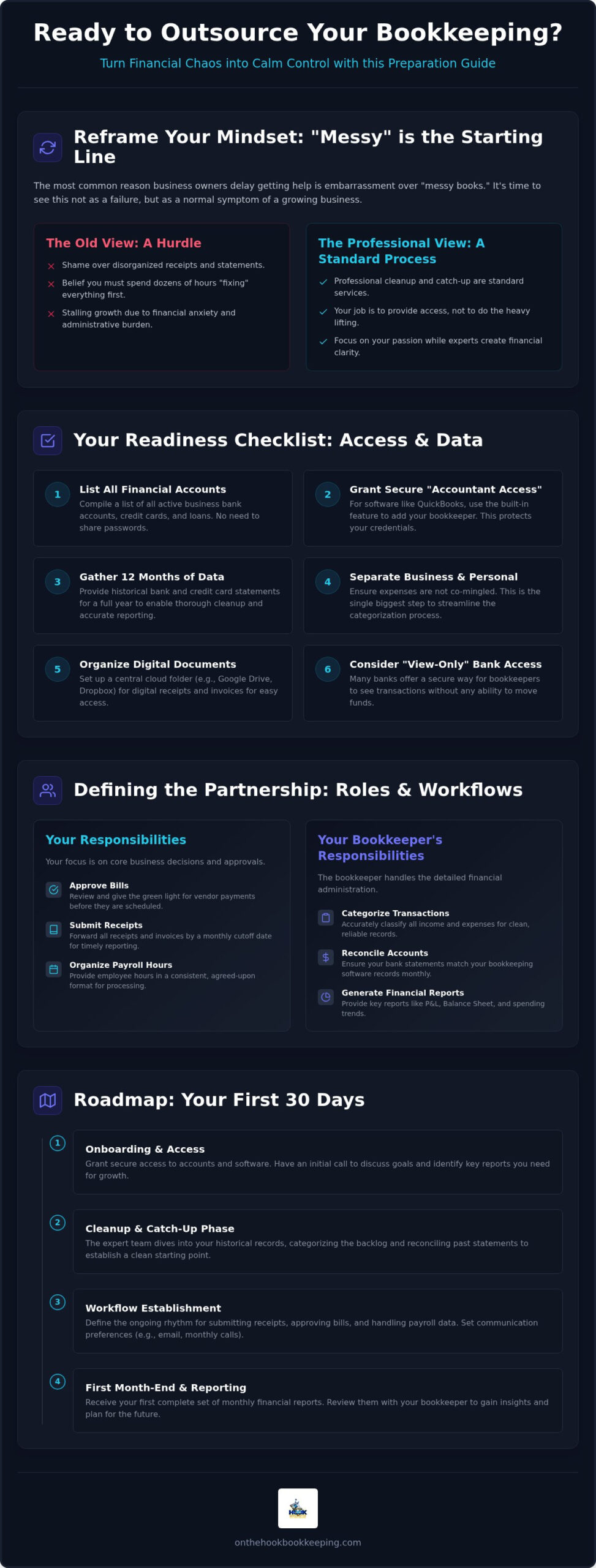
The biggest myth in the industry is that you must “fix” your records before a professional can see them. This isn’t true. Professional cleanup and catch-up support is a standard entry point for most of our clients. You don’t need to spend your weekend reconciling QuickBooks before our first call. In fact, doing so often creates more work for the experts later. We specialize in the heavy lifting of historical records. Your job is simply to grant access and let the experts handle the rest. This shift in perspective is the most vital part of learning how to prepare for outsourced bookkeeping effectively.
The Practical Readiness Checklist: Access and Data
Once you’ve cleared the mental hurdle of “messy books,” it’s time to gather the digital keys to your financial house. Learning how to prepare for outsourced bookkeeping starts with a simple inventory. Compile a comprehensive list of every active business bank account, credit card, and loan statement. You’ll also need to identify your current software stack. If you’re using QuickBooks Online, you don’t need to hand over your personal password. Instead, prepare to grant “Accountant Access.” This secure method protects your credentials while allowing your partner to work behind the scenes without interruption.
If your records need a fresh start, gather historical data from at least the last 12 months. This window allows for thorough cleanup and catch-up support to get your balances back in alignment. One vital step in this process is ensuring your business and personal expenses are strictly separated. Co-mingled funds create friction and slow down the categorization process during onboarding. If you’re feeling overwhelmed by the sheer volume of data, remember that a reliable bookkeeping partner can guide you through each step of the collection process.
Streamlining Your Digital Paper Trail
Modern bookkeeping relies on a digital paper trail rather than physical folders. Organize your digital receipts and invoices in a central cloud folder or a dedicated app to make transaction categorization seamless. For maximum security, check if your bank offers “view-only” access. This allows your bookkeeper to pull necessary statements and verify balances without having the authority to move funds or change account settings. It provides the visibility required for accurate reporting while keeping you in total control of your capital.
Defining Your Partnership and Communication Workflows
A successful transition isn’t just about software; it’s about defining the rhythm of your partnership. When deciding how to prepare for outsourced bookkeeping, you must establish clear communication channels that fit your specific schedule. Will you meet for a monthly strategy session to review performance, or do you prefer to correspond primarily via email? Setting these expectations early prevents friction and ensures you always feel supported by a steady hand.
You must also define specific boundaries for Accounts Receivable and Accounts Payable. Clear roles are vital for maintaining a clean trail:
- Invoicing: Who is responsible for clicking “send” on customer invoices?
- Bills: Who approves vendor payments before they are scheduled?
- Cutoffs: What is the monthly deadline for submitting receipts to ensure timely reporting?
We also establish a process for “unidentified” expenses. Instead of letting mystery transactions clutter your records, we create a simple workflow to categorize them together. This proactive approach keeps your books pristine for year-end requirements without creating a backlog of questions.
Establishing Clear Roles for Payroll and Reporting
Payroll requires a precise handoff to ensure your team stays happy. You’ll need to define who organizes employee hours and the specific format for sharing that data with your bookkeeper. This structured approach ensures accurate, timely pay without you managing the administrative heavy lifting. Once the data is processed, your monthly financial reports become your primary tool for growth. These documents allow you to monitor margins and spending trends effortlessly. By understanding how to prepare for outsourced bookkeeping through these workflows, you move from daily survival to empowered, strategic decision-making.
Moving Toward Financial Visibility and Peace of Mind
The path to organized financials isn’t paved with perfect spreadsheets; it’s built on a willingness to let go of the administrative burden. By auditing your mindset and following a simple digital checklist, you now understand exactly how to prepare for outsourced bookkeeping without the fear of judgment. Whether it’s granting secure accountant access or defining your payroll handoff, every small step brings you closer to a state of calm control over your margins. You don’t have to navigate this transition alone. Our team provides expert cleanup for historical records and ensures stress-free payroll processing so you can return to your primary passion. It’s time to stop the heavy lifting and start building with confidence. Get your time back with professional bookkeeping from On the Hook Bookkeeping and enjoy clean, up-to-date financial records every month. Your business deserves a steady hand.
Frequently Asked Questions
Do I need to clean up my QuickBooks before hiring a bookkeeper?
No, you don’t need to touch your records before our first conversation. Most business owners feel they should tidy up first, but professional cleanup and catch-up support is a core part of our expertise. We specialize in untangling messy historical records. Letting a pro handle the heavy lifting from the start ensures your chart of accounts is structured correctly.
What documents do I need to provide for catch-up bookkeeping?
When learning how to prepare for outsourced bookkeeping, focus on gathering your core financial statements. You’ll generally need twelve months of bank and credit card statements, loan agreements, and any existing payroll records. If you have digital receipts or invoices, organizing those in a cloud folder helps. We use these documents to verify every transaction and ensure your historical balances align.
How much time will it take me to manage an outsourced bookkeeper each month?
Managing an outsourced partner usually requires only one to two hours per month once the initial onboarding is complete. Your primary tasks will include answering occasional questions about specific transactions and reviewing your monthly financial reports. This partnership is designed to give you time back; it shouldn’t add another administrative burden to your already busy schedule.
Is my financial data secure when working with a virtual bookkeeper?
Security is a top priority for professional virtual services. We use encrypted portals for all document sharing and recommend granting Accountant Access to your software rather than sharing your personal login credentials. Many banks also offer view-only access for bookkeepers. This allows us to pull statements and verify balances securely without ever having the authority to move funds.